Respond to the whole experience—not only what has been forgotten.
Memory loss can affect communication, judgment, orientation, sleep, appetite, and the ability to sequence familiar tasks. Care is most helpful when it stays person-centered.
Familiar patterns. Gentle cues. Honest fit.
A small residential memory care setting can offer repeated cues and familiar patterns. The same rooms, the same general flow of the day, and a smaller circle of caregivers may support recognition. Simple signs, visible personal items, gentle prompts, and unhurried transitions can make a task easier. These approaches are not guarantees—every person responds differently.
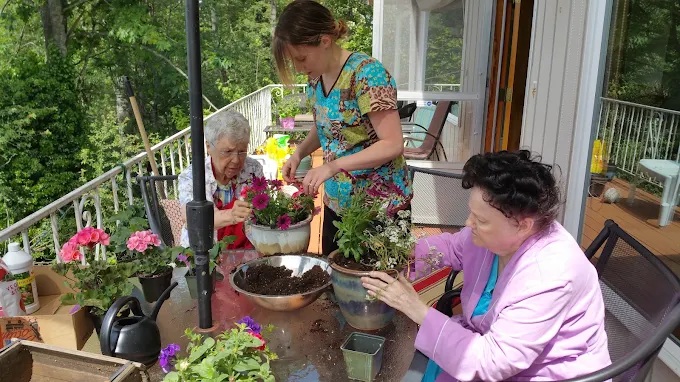
Person-centered dementia care begins with life history. A favorite song, a former occupation, a family tradition, a preferred meal, or a familiar household task may provide a bridge to connection. Folding towels, looking through photographs, listening to music, watering a plant, or sharing a snack can all be meaningful when the experience is comfortable.
Communication that respects pace
As dementia progresses, communication may become less verbal. Caregivers can pay attention to tone, facial expression, gestures, and engagement. A short sentence, one choice at a time, and a pause to process may work better than a series of questions. When a person is distressed, the first step may be to reduce demands and look for an unmet need.
Safety conversations should be direct
Families may want to discuss wandering, falls, nighttime wakefulness, exit-seeking, choking risk, medication changes, and other concerns. Ask what Gracious Living can safely support now and what circumstances would require a different setting.